The Etruscan Population/1 – The Settlements
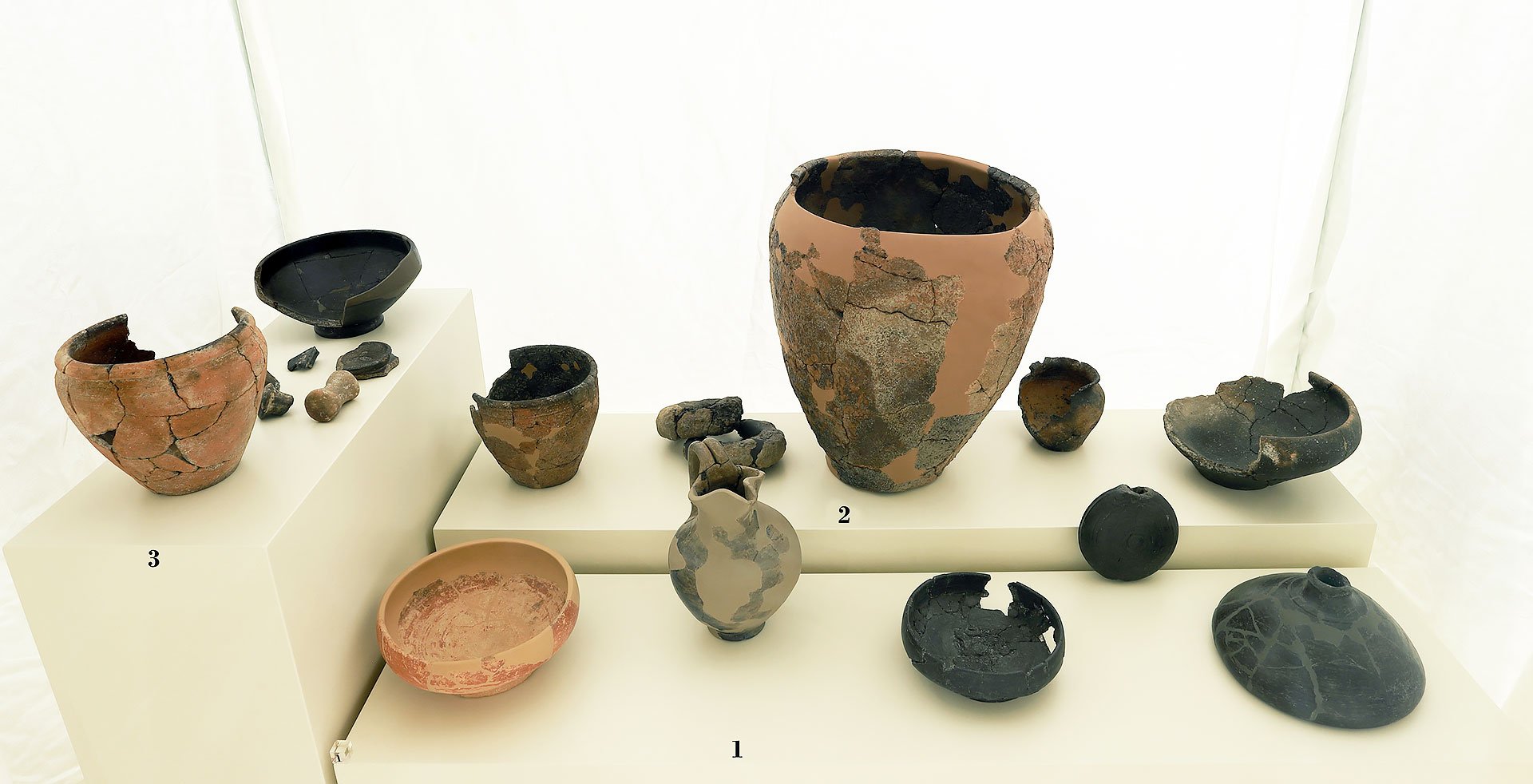
1.
At Pedrignano, archaeologists uncovered the remains of an elliptical hut featuring a central post that supported the roof.
Nearby, they also discovered the lower part of a small furnace—a pit about one meter in diameter, with heat-altered walls, traces of charcoal, and baked clay inside.
South of these structures, several orthogonal drainage channels were identified, and to the east of the channels, a number of burials—both cremation and inhumation—were found.
Among the pottery, mostly dating from the late 7th to the 6th century BCE, a notable number of bucchero vessels stood out. One especially rare find was the so-called “pilgrim’s flask,” a form inspired by bronze-sheet prototypes that, in turn, imitated perishable containers once used to transport small quantities of liquid.

2.
This area once hosted a relatively extensive settlement, with remains of dwellings, production structures, and burials.
Among the identified features was an oval-shaped hut, measuring approximately 10.50 by 6.50 meters, with a partially excavated lower section. Inside, archaeologists uncovered a dolium buried in a pit—likely sealed with a hatch—containing several vessels, a spindle whorl, and twelve ring-shaped loom weights used to keep threads taut on vertical looms.
Near the hut were a number of small pits, possibly originally used for clay extraction and later repurposed as refuse dumps, as well as three small furnaces, one of which had been damaged during the construction of the hut itself.
The materials recovered from the site date to the second half of the 6th century BCE.

3.
At San Pancrazio, the discovery of eight ceramic kilns suggests the presence of a dedicated production area. Each kiln featured a circular combustion chamber about one meter in diameter, though their prefurnaces varied—some were narrow and elongated, while others were as wide as the combustion chamber. These differences may indicate the production of different types of pottery.
Nearby, two large elliptical pits were uncovered, possibly the remains of huts or storage areas for materials and goods. Along with pottery fragments in various states of preservation, archaeologists also found spindle whorls and bobbins. The artifacts date to the 6th century and the early 5th century BCE.